
Hans Scheib at the Mutter Fourage Gallery: An obituary
Updated: Apr 22

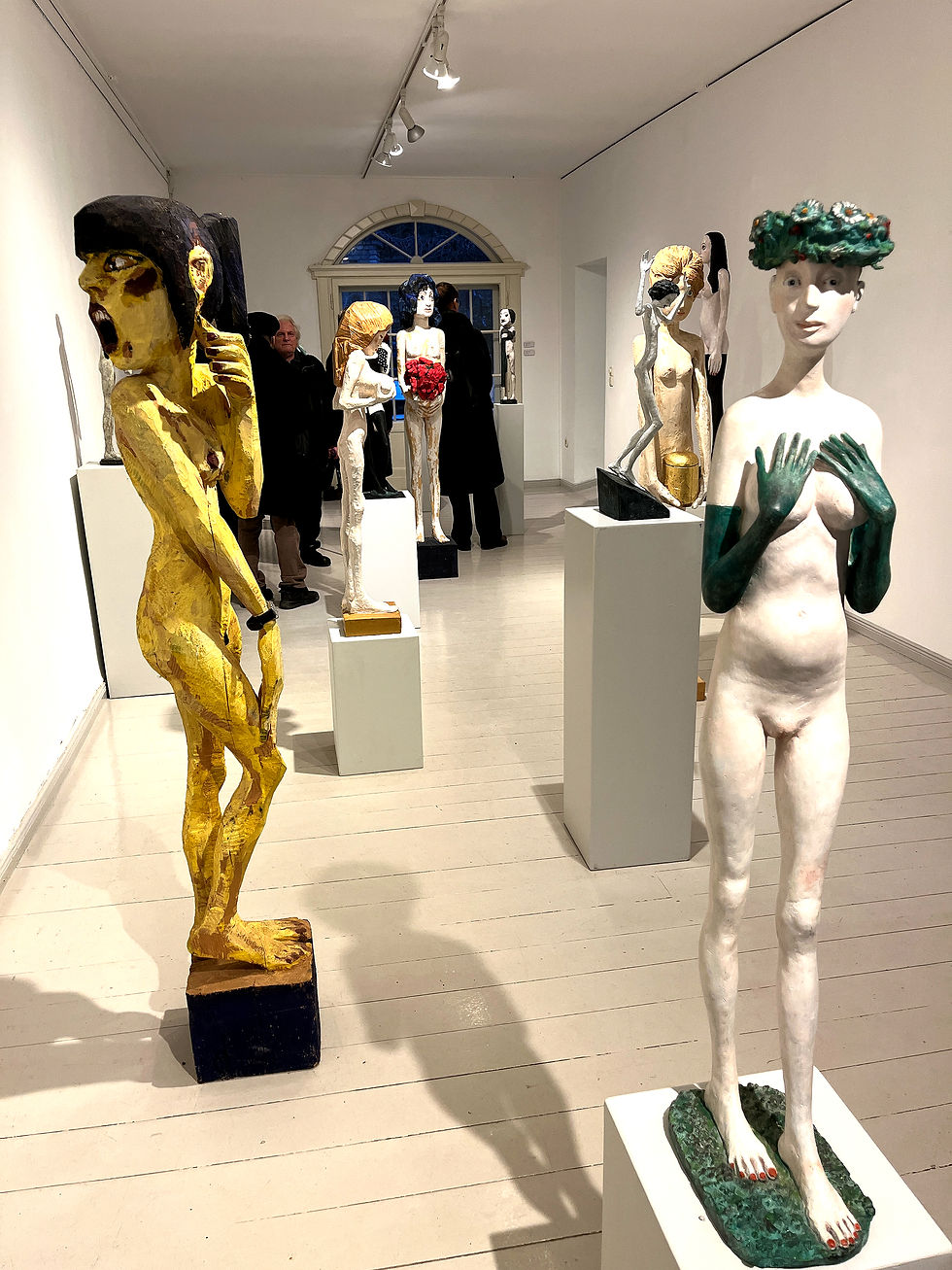
Hans Scheib in the Mutter Fourage Gallery
I was very fortunate to meet Hans Scheib again during his exhibition opening on February 14, 2026 at the Mutter Fourage gallery. He was now in a wheelchair, but he was full of enthusiasm and still talked about his many plans. Unfortunately, things turned out differently.
The Mutter Fourage gallery under the superb management of Jens Kunath and Lea Gryze,
had dedicated a solo exhibition to him from February 14th to March 29th, 2026. The gallery, located away from the hustle and bustle of Berlin's art scene in Berlin-Wannsee, is a wonderful place for contemplation. This gallery regularly features wonderfully curated exhibitions.
One focus is the presentation of artists from the Berlin Secession. Currently, they are showing Philipp Franck, whose work I, as a Berliner, greatly admire, and who is a particular focus of the gallery. Opposite the gallery is a highly recommended café, inviting to discussing the exhibitions just experienced.
However, the gallery also regularly exhibits contemporary artists. The formats, it seems, are inherent to the gallery's DNA and are also accessible to private collectors – it's no coincidence that the gallery has a loyal network of private collectors in Zehlendorf.
On the occasion of the death of Hans Scheib on April 10, 2026, I will therefore discuss his work in more detail.
Hans Scheib is a figurative sculptor—a stark contrast to the work of Brancusi, currently on display at the Neue Nationalgalerie. Likely as a result of his training in Dresden, he developed an expressive formal language, an artistic style also found in paintings of his contemporaries from Dresden and Leipzig (e.g., Penck, Rauch).
Many of his motifs depict pain, grief, and death, but also hints of love and eroticism. Recurring motifs of these expressions include heads and nude female figures. Similar to the work of Giacometti, his figurative representations are elongated, delicate, standing, or gracefully striding. Unlike many art historical precedents, he meticulously worked and coated surfaces, adding expressive color accents. This creates subtle erotic undertones without crossing any boundaries. His preferred materials are wood (more frequently) and bronze, which, however, are usually not discernible due to the surface treatments.
Apart from two works, including a wooden altarpiece, the female figure sculptures formed the focus of the exhibition at the Mutter Fourage Gallery. The figures are mostly 160-170 cm tall, making them lifelike and suitable for a private collector.
Over the years he was represented in numerous exhibitions, including the Scharf-Gerstenberg Collection exhibition in 2025; numerous prizes recognized his new approach to sculpture, and he remains in our memory in many public collections—as an artist with fractures and a witness to difficult times, who nevertheless always remained optimistic and focused on the future.
For Further Informations
Tagesspiegel Birgit Rieger


Comments